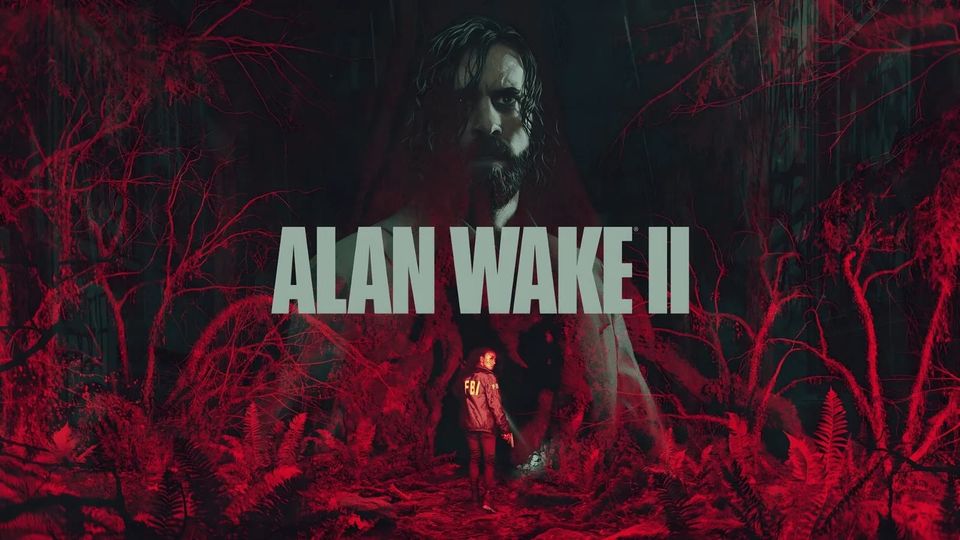
Alan Wake II is my new favorite Remedy game. Hell, it's probably my new favorite game of all time. For me to truly love a game, it needs to have a strong narrative paired with solid gameplay, creating an experience I can immerse myself in. In fact, I'll often forgive somewhat frustrating gameplay, if the story is compelling enough (as I did with the first Alan Wake).
If I love a game, I will return and replay it again and again over time. Alan Wake II is a game I will certainly play again—in fact, I already have. As soon as I finished it, I immediately jumped into The Final Draft (the game's version of New Game+), because I heard that it would provide new layers to the story and a more complete ending. The changes in The Final Draft are subtle, but the resolution of the story is immensely satisfying.
I'm enthralled by Alan Wake II. This isn't going to be a review, so much as it will be me just gushing about how much I love this game. I'll try to avoid any major spoilers along the way, but a few may slip through.
The Story
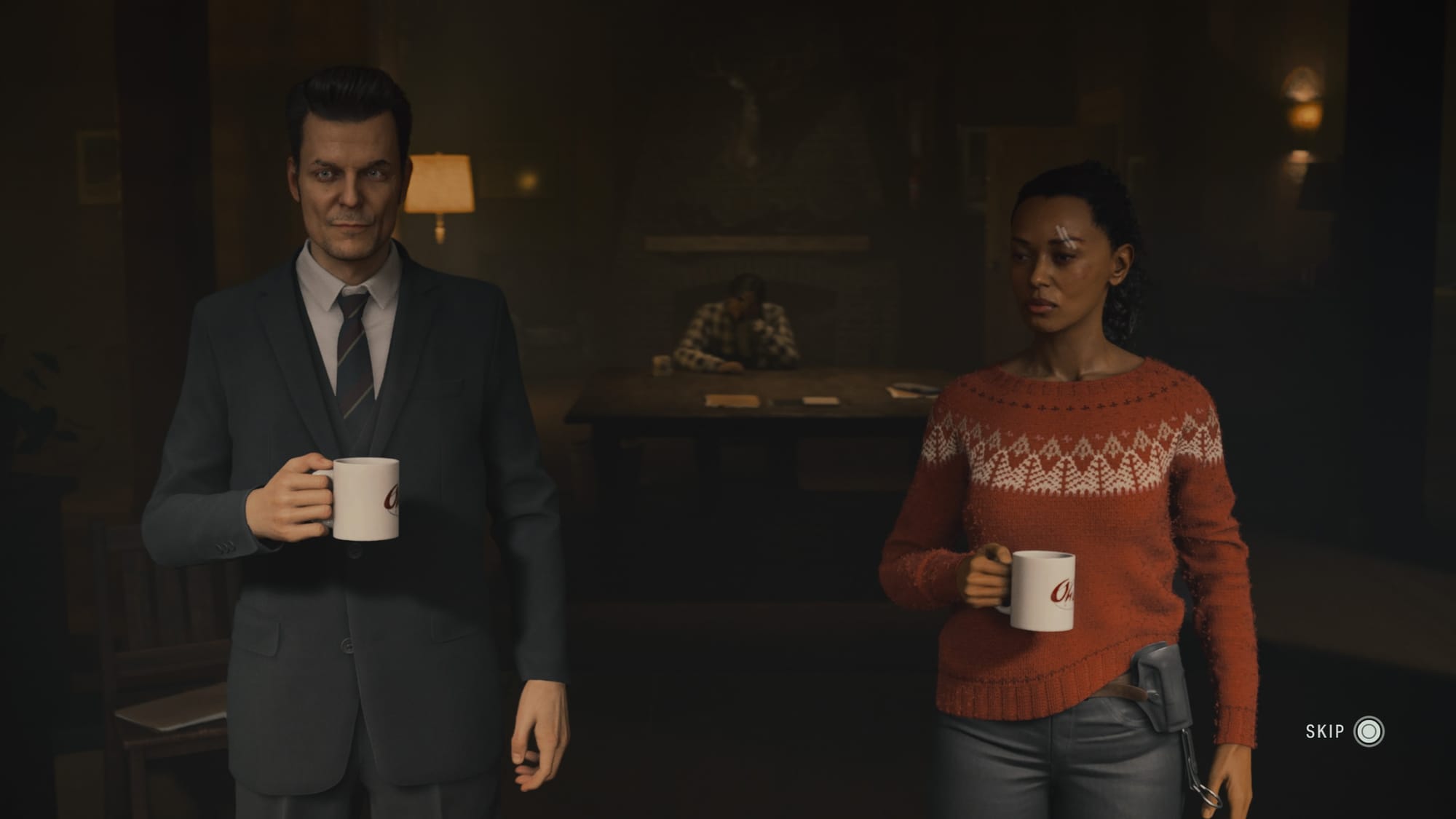
FBI agent Saga Anderson and her partner Alex Casey journey to the town of Bright Falls to investigate a ritualistic murder. The two agents quickly find themselves in a situation much stranger than they bargained for, when they realize the crime is connected to a murder cult, the corpse suddenly returns to life, and people start becoming possessed by darkness. Adding to the strangeness is the sudden appearance of manuscript pages describing the agents and events as or even before they are occurring.
Meanwhile, the titular Alan Wake is trapped in the Dark Place, stuck in the writer's room—just as we left him at the end of the first game. All of his effort is focused on escape and the hope that he can write a version of the story that will allow him to find his way out. He explores the Dark Place, which appears to him as a distorted version on New York, looking for inspiration that will help him move the story forward.
As the player, you're able to take on the role of both Saga Anderson and Alan Wake, their stories swirling together and layering on top of each other. Each action the one takes affects the reality of the other as they move to take on the darkness pouring out of Cauldron Lake.
Returning to Bright Falls
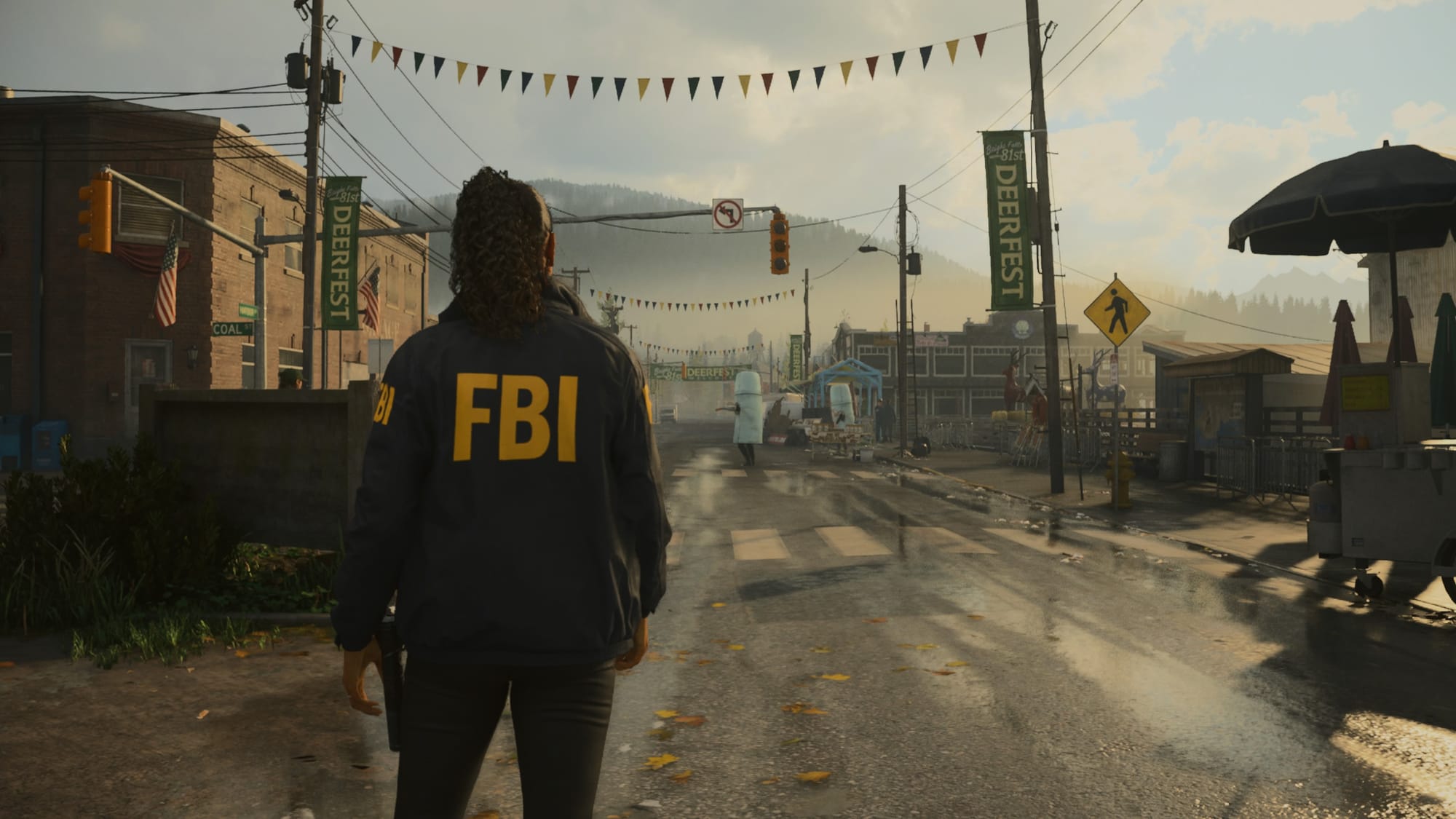
Bright Falls is a quaint and charming little town, most known for its annual Deerfest. Returning to the town feels nostalgic, from the charming kitsch of the Oh Deer Diner to the calm waters off the docks. And seeing these familiar sights from Saga's perspective provides a wonderful sense of novelty.
If you choose to wander around the town (rather than heading straight to your objective), Saga can overhear conversations from the town folk. Everyone is friendly and their conversations are full of small-town talk, like whether it's going to rain and the construction of parade floats for Deerfest. On the radio, Pat Maine (a beloved character from the first game) discusses his new sponsor Davis Family Beef Jerkey, and on TV the Koskela brothers present delightfully silly ads about their tour guide, beer, and Coffee World businesses (I love these guys).
But underneath all the charm, a sense of the strange underlies everything. In the park, a woman talking to the birds mentions that the birds keep her from "going a little cuckoo," with an unsettling little laugh. Another pair of women recite what sounds like poetry back and forth to each other: "The passage of time is deceiving. / The days of our lives are fleeting. / And they end, in the end. / And they end, in the end," before switching to a normal "How are you?" conversation in a flat, dreamy tone of voice.
It all feels slightly off, which feels like the first signs of the Dark Presence starting to bleed into the town. And as the game progresses, the uncanny underbelly of this small town grows in increasingly strange and wonderfully effective ways.
Investigating the Darkness
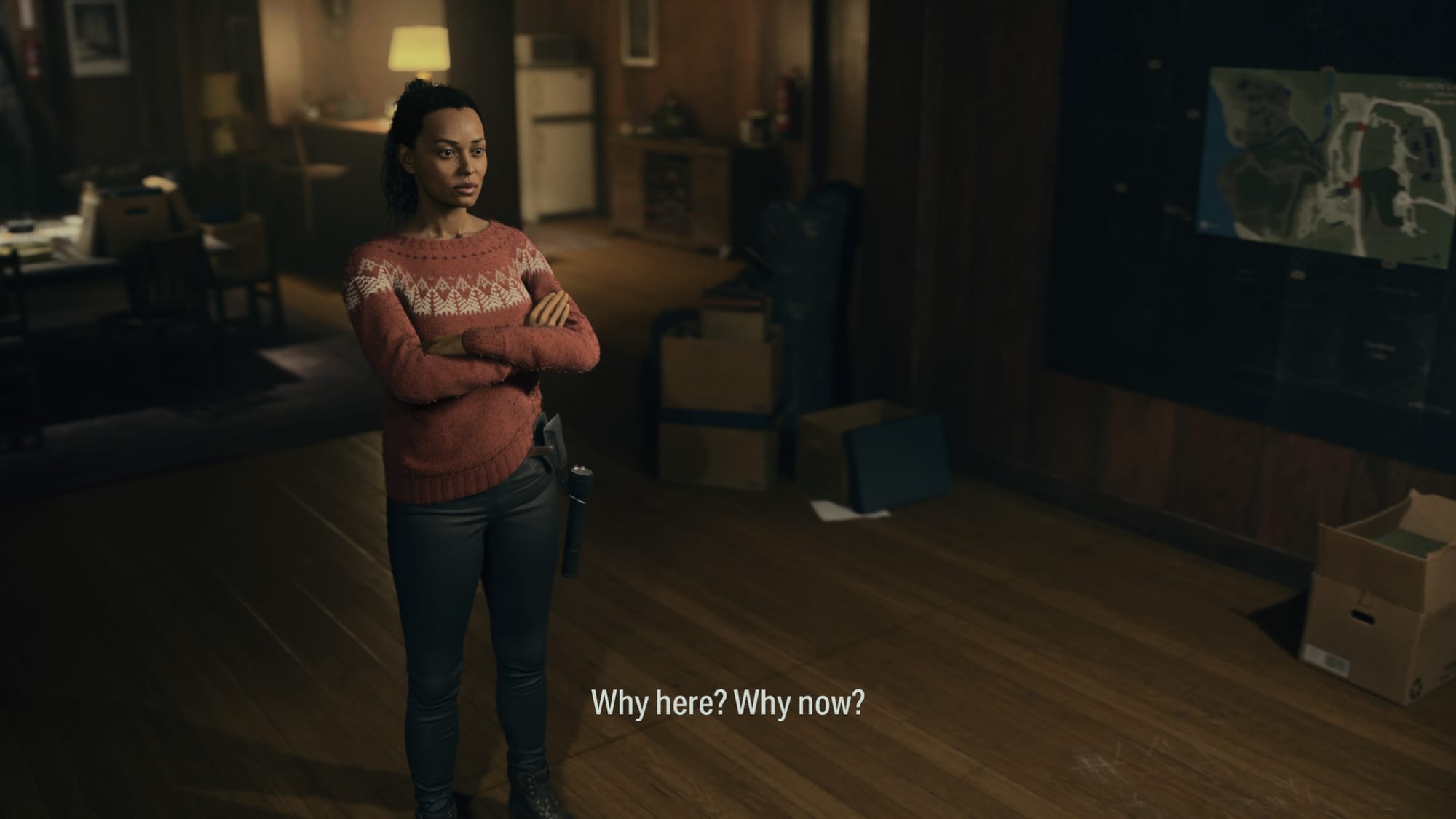
Saga Anderson is a brilliant introduction into the game. She represents a grounded view of the world, someone who is experiencing the strangeness of Cauldron Lake for the first time. This perspective is specially important for someone who may not have played the first game, since they can discover what's happening and how to navigate it alongside her.
As Saga, the player spends a lot of time alone, exploring Cauldron Lake, Bright Falls, or Watery in the twilight of evening or morning. Most of the areas are dark and full of Taken (people possessed by the darkness), who Saga can either avoid or fight. The combat involves using the flashlight to dispel the darkness protecting them, and then opening fire with her gun. The player has to carefully manage resources (flashlight batteries and ammo) to get through some decently sized maps. So, exploring in through the dark trees holds plenty of tension, because you never know when an enemy might be hiding behind a bush.
All of this wandering is meant to serve the murder investigation (or to find more supplies to help her survive longer). Out in the wild, dangerous areas, Saga looks for clues (such as manuscript pages, letters, documentation, objects, or observations of the world). This includes several different kinds of collectables, such as cult stashes and Alex Casey lunch boxes, which provide evidence for the case and expand the overall story, as well as offering resources. In the safe areas of the towns, Saga has the opportunity to meet and speak with locals, who could be potential witnesses or suspects.
Saga processes all of this information by turning inward, to what she calls her Mind Place. Resembling the the local field office, this Mind Place is where Saga holds memories and information to support her confidence and work. The player is able to interact and move around this space, where they can upgrade weapons, look back on documents and audio and video recordings collected, and find mementos from Saga's life.
Most importantly for the investigation, however, it lets the player access Saga's case board and profiling desk. The case board is where she places the clues she discovers, aligning them with specific cases. In this way, she is able to put the pieces together, consider theories, make connections between clues, and finally draw out conclusions to solve the case.
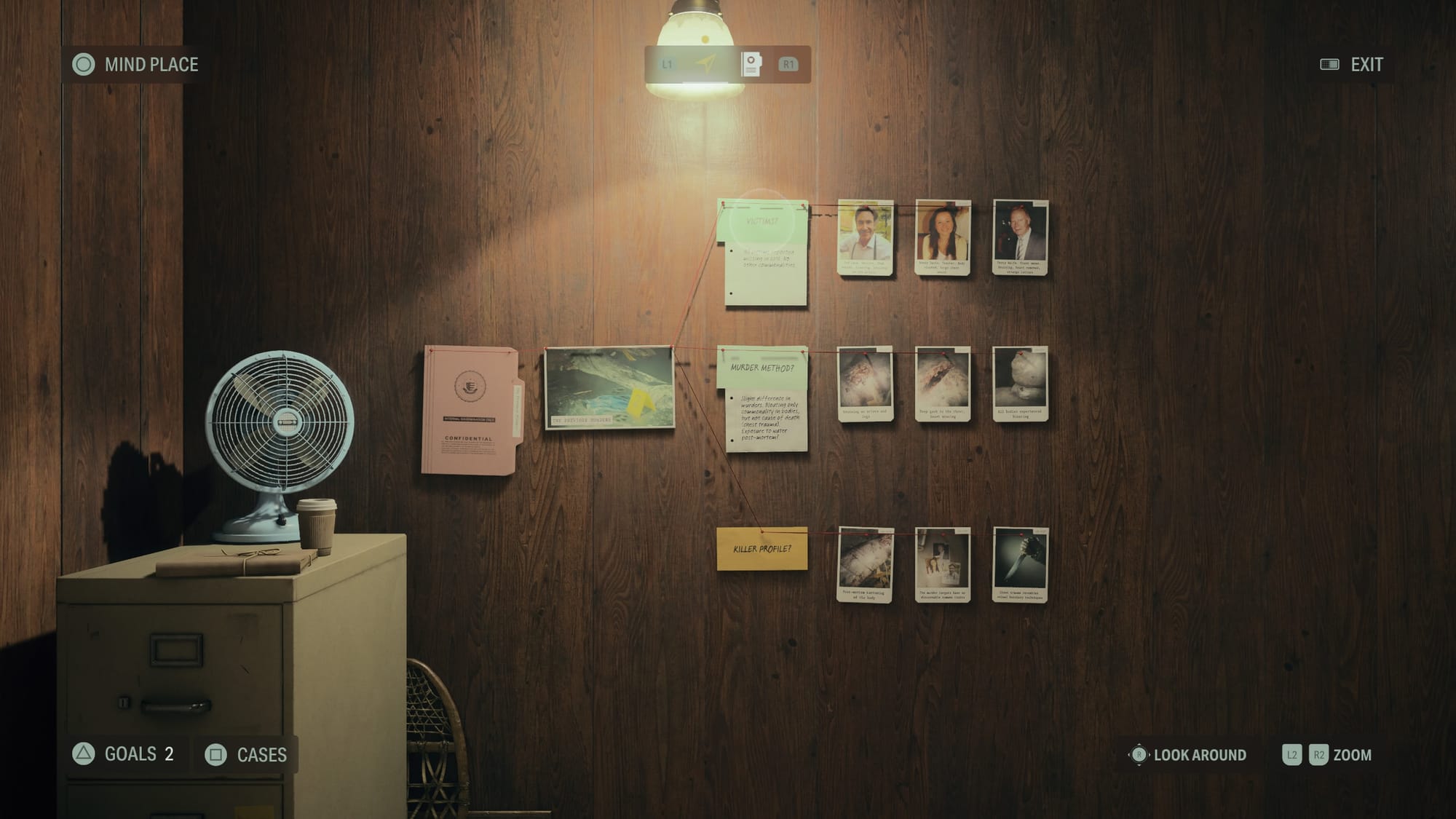
At the profiling desk, Saga is able to look more closely at important witnesses and suspects and consider their possible motives. During a conversation with a witness, the player can open up profiling and consider what the person might be hiding behind their words, allowing Saga to ask more pointed questions or call someone out on a lie.
Both the case board and profiling desk are incredibly gratifying to work with. I loved filling out the case board, in particular, watching the clues click together with the classic red string connecting it all together. Even when I was a step ahead of Saga, knowing certain things about the game or world she didn't, I enjoyed seeing the conclusions she would come to and her commentary on the facts pinned to the board.
Saga is a fantastic character. She's calm, capable and resilient. She's also fascinated by the case. The weirdness of it all excites her. It's only when the case starts to bleed into her own life, putting her family at risk, that she really becomes shaken — and even then, she soldiers on. Along the way, Saga ends up discovering more about herself and her past than she expected. It's an incredibly journey, one that has anchored Saga as one of my favorite video game characters of all time.
Spiraling Through the Dark Place
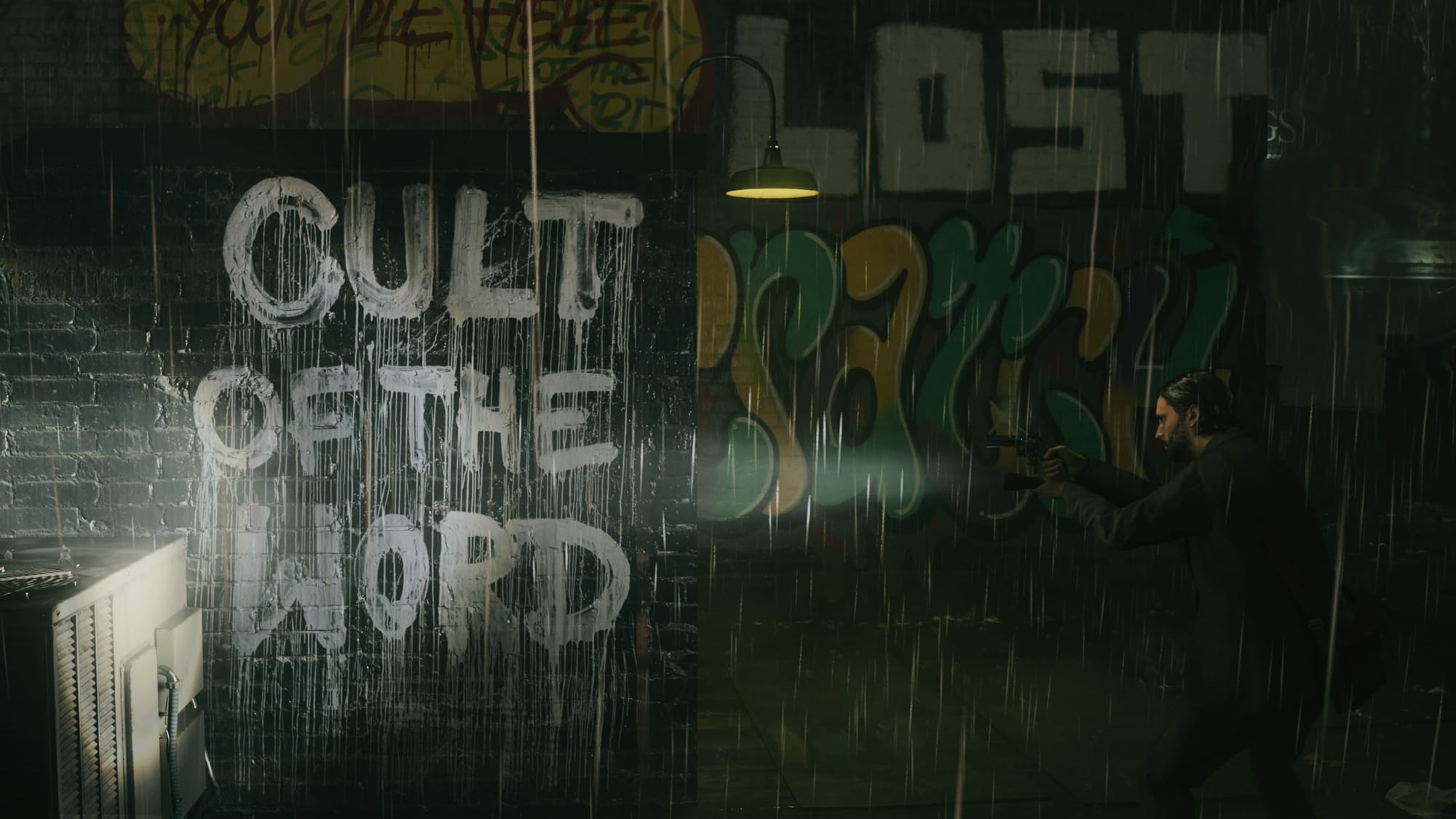
While Saga works to solve the case in Bright Falls, Alan Wake attempts to escape the Dark Place, a twisting, looping reality that mirrors your own fear, hate, and shame back to you. Over time, it breaks you down and makes you forget, turning you into the shadow of yourself.
For Alan, the Dark Place has taken on a distorted version of New York, where he once lived with Alice. This is a bleak, grimy version of New York, one that reflects Alan's own churning doubts and hopes back on him. Billboards portray movie posters for Alan's most famous character, Alex Casey, the hard-boiled detective. The walls of the streets and subway are adorned with masses of graffiti, all sending conflicting messages dredged up from his own mind. "Scratch." "Your fault." "You're lost." "Find Alice." "Forget." "You die here." "Don't write." "Cult of the Word."
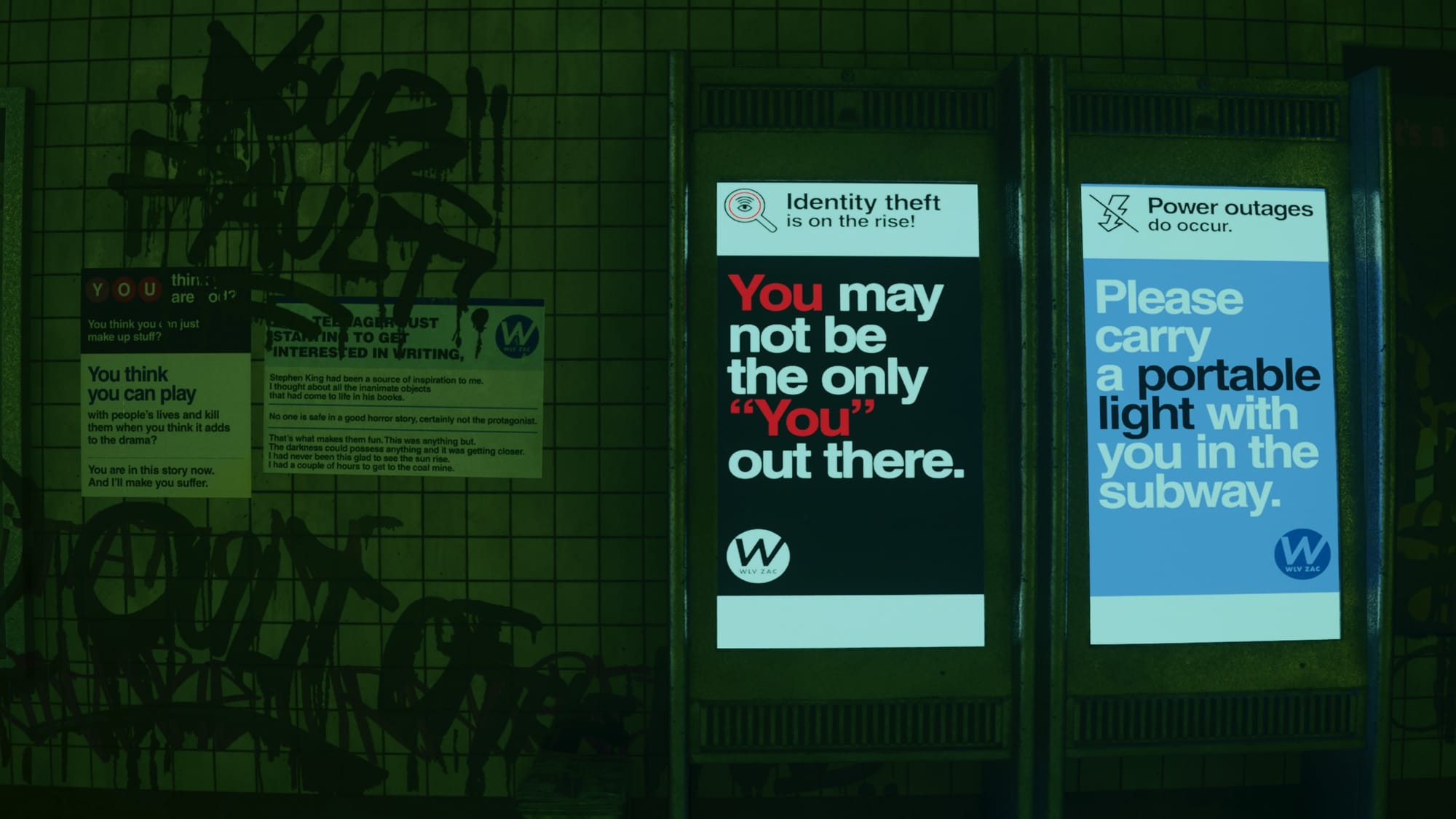
The streets of this New York are filled with shadows, likely the souls of people who have fallen into the Dark Place. Their voices present a constant unsettling murmur of despair or rage. Some of these shadows are nothing more than the thin wisps of ghosts. Others are hostile, forcing Alan to defend himself. It's never clear which is which until you beam your light onto them, either revealing a threat or wasting a battery. It leaves you constantly on edge as your resources run low and you have to decide whether to try slip by them and risk being attacked or use up a battery to clear them out.
When there is an enemy, combat is the same as it is for Saga: shine a light to dispel the darkness, then open fire. However, the load out for Alan is slightly different. His main weapon is a revolver, which is slower to reload, making the player think even more carefully about their shots.
Like Saga, Alan has his own mental room. In his case, it's the writer's room, which is nearly featureless. It contains a desk and typewriter, a plot board, two large windows, and a taxidermied owl hanging on the wall. The plot board is where Alan brings in inspiration, which allows him to continue writing his way deeper into the story.
Certain locations in the Dark Place have special significance, representing fixed points in the shifting space, due to their connections with gruesome murders. In these places, Alan is able to find inspiration in the form of echoes (ghostly memories of what may or may have not been actual events in the real New York). Using these echoes, Alan can change the information on the plot board, switching between scenes, which shifts reality in the Dark Place. This reveals new echoes and/or opens new pathways forward.
The premise of Alan Wake has always been that the Dark Place feed on artists, using their creativity to manifest in the world. In Alan Wake II, it's fascinating to see how this plays out with the gameplay, the way the player is able to literally shape the world with Alan's words.
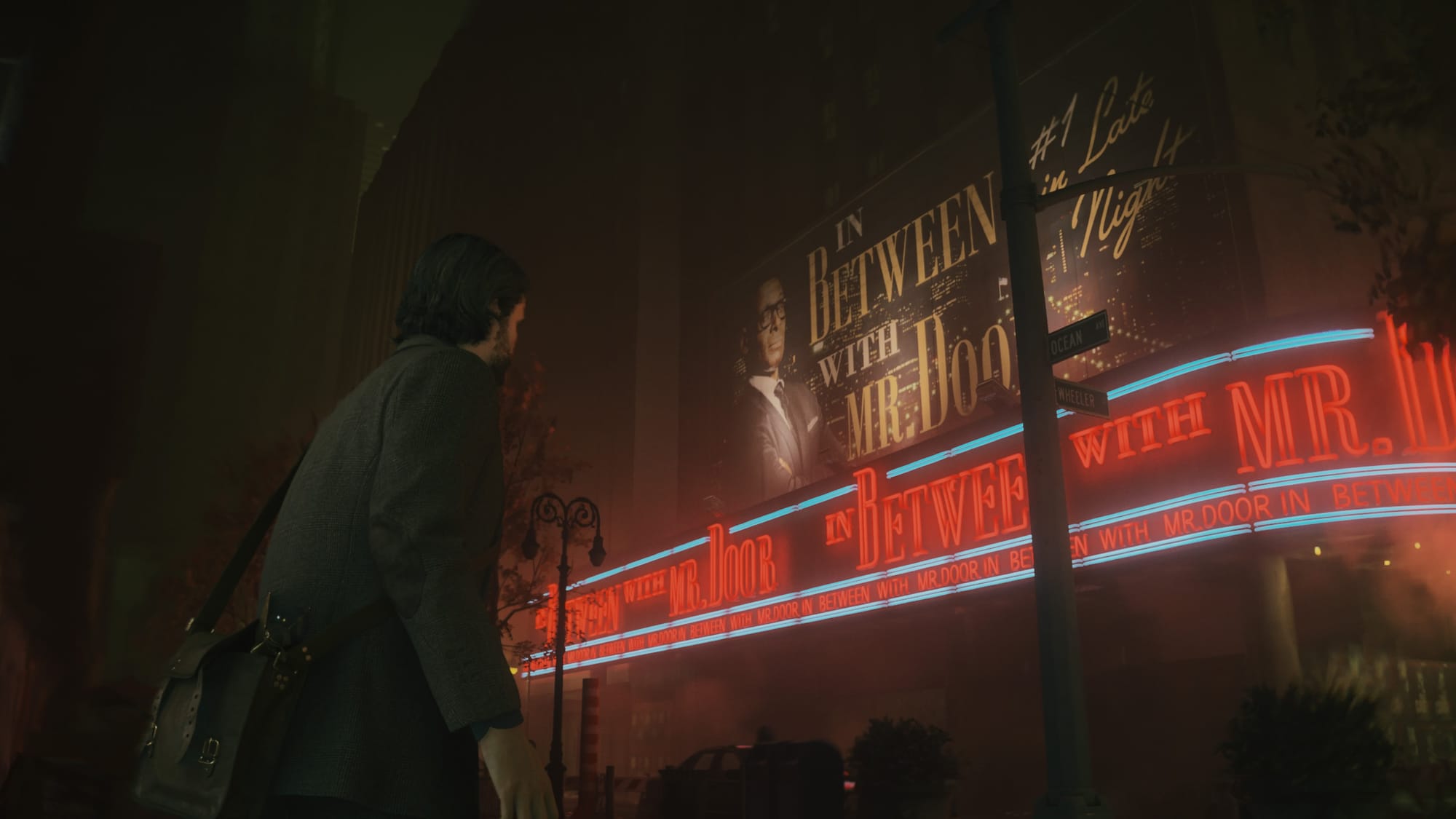
The Dark Place leads the player down some disturbing, strange, and trippy places. Most notably with the anomalous presence of Mr. Door. When the player first enters the Dark Place, Alan finds himself in the green room for the talk show, In Between with Mr. Door. The moment calls back to the first game, where we also saw Alan on a talk show for his writing. But here, it's a stranger experience.
Door is not something dredges up from Alan's memories. He's something else entirely, representing a mysteriously powerful figure, who is meddling with the events of the story for reasons we don't know. Ultimately, Alan continuing to return to Door's talk show flows into one of the most wildly fun and entertaining gameplay sequences I've played in a long time. And if you've played the game, you know exactly what I'm talking about. If you haven't, then I don't want to ruin the surprise of this moment for you.
Bring In the FBC
Control was the first game to reveal the Remedy shared universe. In the game, Jesse Faden (the main character) investigates the Oldest House, the headquarters of the Federal Bureau of Control (FBC), which investigates and contains Altered World Events (AWEs). In the Oldest House, she discovers old case files, some of which includes documents that make reference to Alan Wake (referring to him as a parautilitarian) and the events at Cauldron Lake as an AWE. This is explored even further in the AWE DLC, which explores what happened to some of the side characters from Alan Wake and even brings in some of the light and darkness mechanics into the combat.
Alan Wake II further cements the connection between these two storylines. Following the events of the first Alan Wake, the FBC has set up a research facility to study and monitor the effects of the ongoing AWE at Cauldron Lake. The intent is to be able to better understand the phenomenon, so that they can take quick and appropriate action if and when another dangerous event does occur.
Early in the game, Saga finds references to the FBC presence at the lake, including a small monitoring device, documentation, and a series of strange nursery rhymes. The nursery rhyme are particularly interesting, because they provide collectible charms that provide different effects to help the player in combat. They also reveal the ways in which FBC scientists have a tendency to meddle with the powers around them without fully understanding what's happening.
Later in the game, the FBI agents come up against the FBC directly, with Agent Kiran Estevez leading the charge. I'll leave it at that, except to say that Estevez is another fantastic character in the game, practical, straightforward, and funny.
Adjusting to Your Play Style
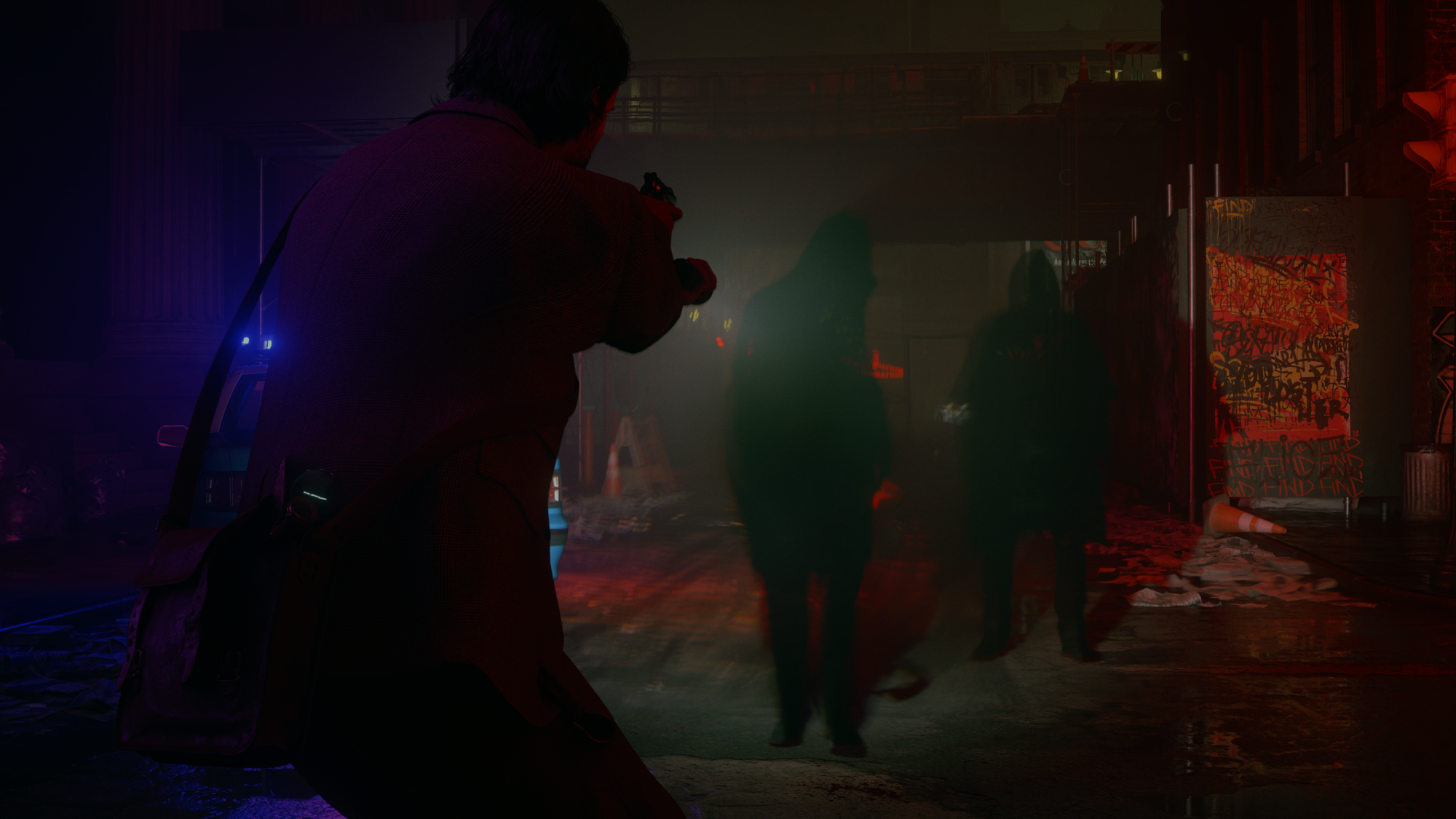
As I mentioned at the beginning of this post, I found the combat in the first Alan Wake extremely frustrating, but I was so determined to see the story through I accepted the struggle. Fortunately, that frustration has almost entirely been removed from Alan Wake II.
The main combat mechanic is the same, in which you need light to break the shield of darkness around enemies before shooting them. But now, encounters with enemies feels more balanced and they've pretty much removed the chance for enemies to sneak up behind you and sucker punch you without warning. In addition, the game has four difficulty levels, so players can increase or decrease the challenge to their liking, as well as a ton of accessibility features to further adjust things to your settings.
When I first started playing the game, I did so on Story mode (the easiest) and also played with the settings. Since I was replaying the first six hours, I wanted to move quickly, so I first tried it with one-shot kills (which made the boss enemies too easy) and then with infinite flashlight batteries (which worked better for me, since it didn't entirely remove the challenge). As I continued to play the game and grew accustomed to the style of combat and movement, I removed the support settings to get a better feel for the combat.
It was genuinely satisfying to be able to adjust the gameplay to my own needs, especially when I played it the second time around. As far as I'm concerned, good accessibility setting are one of the joys of modern games.
Final Thoughts
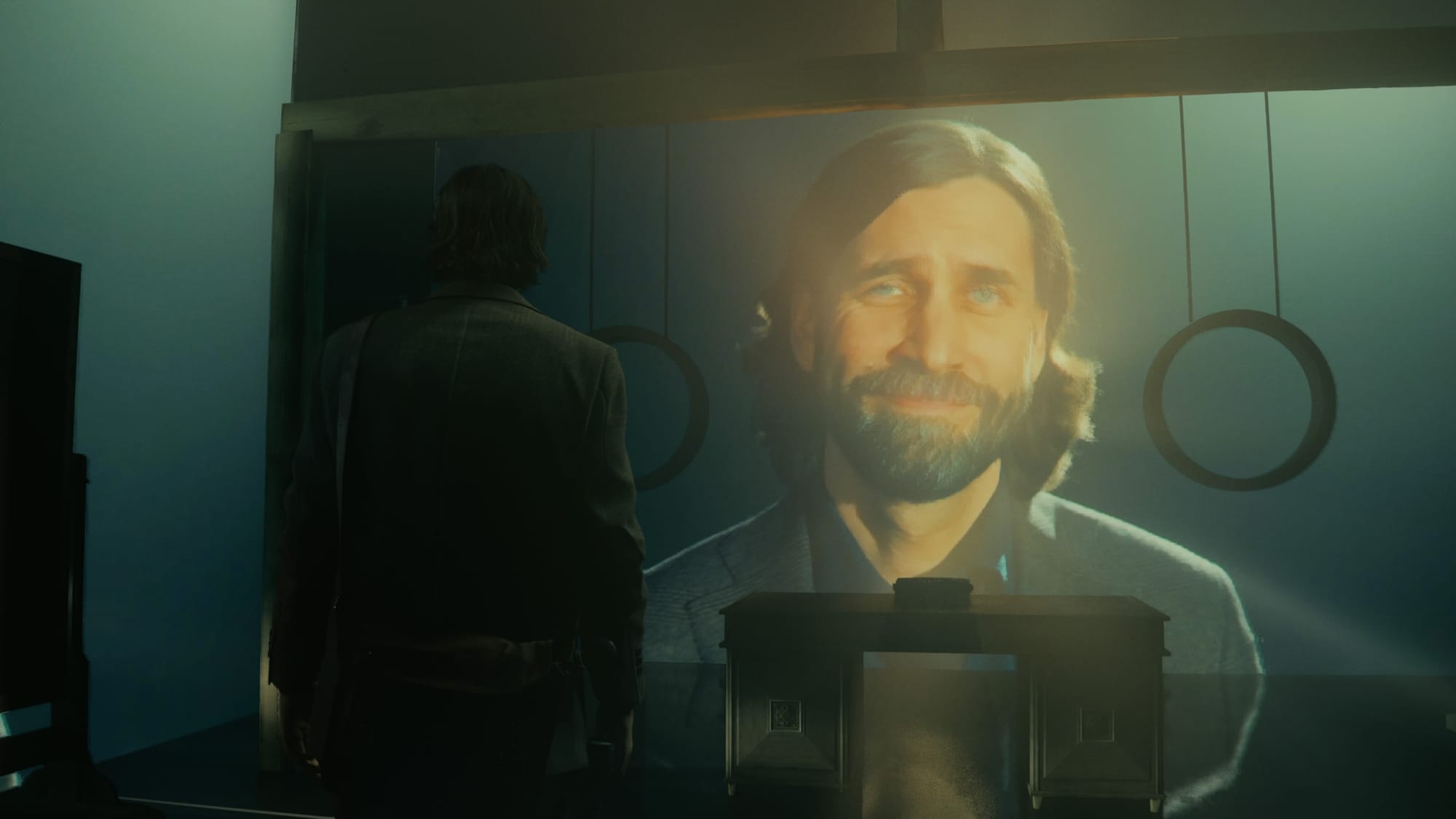
Alan Wake II is so layered and narratively complex, I could probably spend another several thousand words analyzing the various artistic details, the stunning soundtrack, the side stories, and the worldbuilding (and I might just do that someday). While the main narrative does a good job of wrapping things up well, it also leave enough pieces open for future games (like the mystery of Tim Breaker and Mr. Warlin Door, who we meet in the Dark Place). And I could spin a dozen theories on where all of this might be going in the future.
The game also has two excellent DLCs, Night Springs and The Lake House, which are neatly woven into the story. They present fun asides, each exploring the perspective of a different character in interesting ways and with their own unique narrative tone. I've already written up something on that, which will be posted next week.
Thank you for reading and spending a little of your precious time with me! If you’d like to support my work, you can subscribe for free, or if you are a generous soul, you can buy me a coffee.
I make games! You can play them on Itch. If you’re a game designer of developer looking for a writer or narrative designer, you can check out my portfolio.
I also write poetry! Find my books here.